
Why Work Feels Harder Than It Should
(And What’s Actually Causing It)
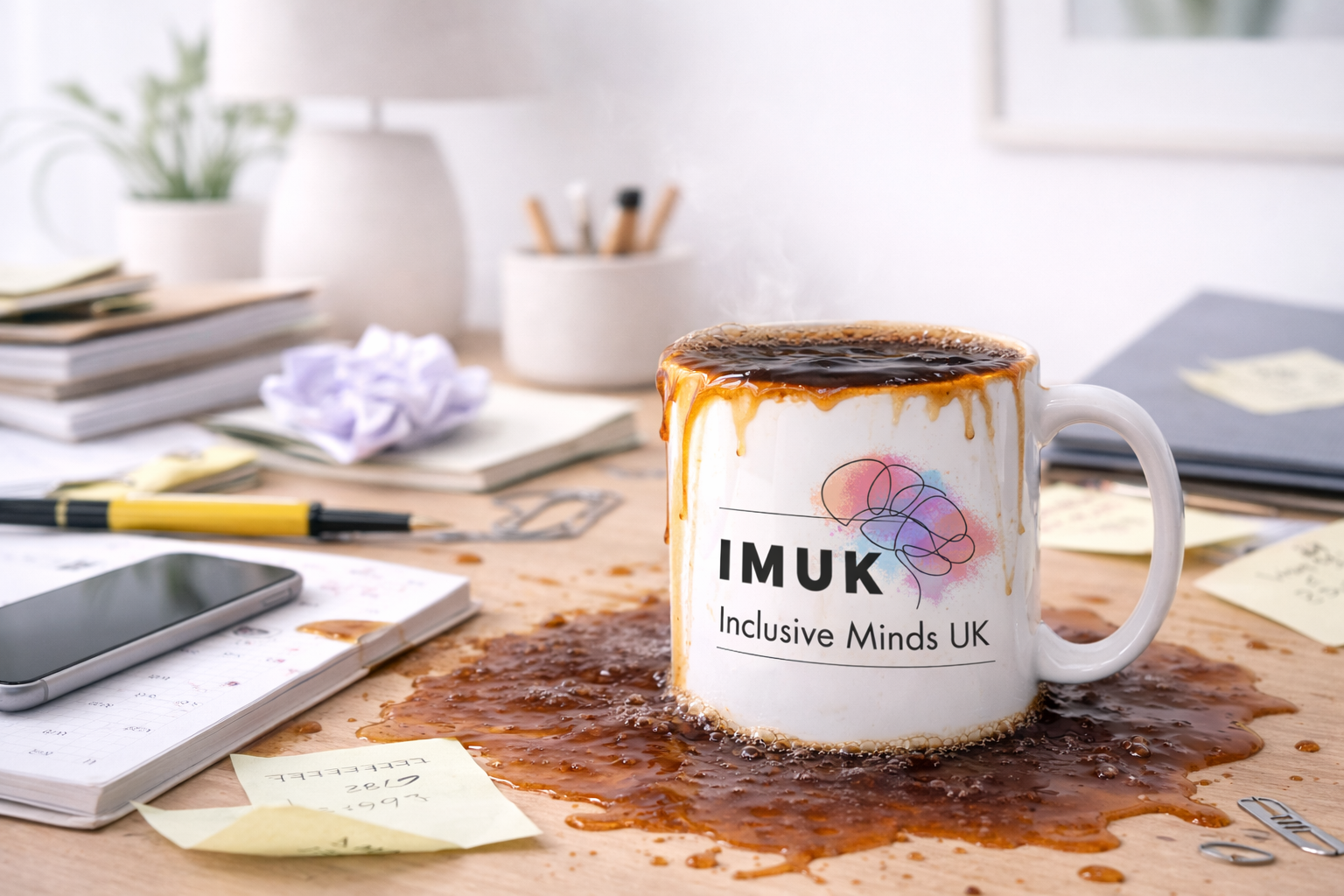
White ceramic mug with the Inclusive Minds UK logo sits on a cluttered wooden desk, overflowing with coffee that spills down the sides and pools across the surface. Surrounding the mug are scattered stationery items including pens, paperclips, sticky notes, a notebook, and a smartphone, with a soft-focus background of a plant and office supplies.
Let’s not dress this up.
I didn’t land here because I had a neat plan or a five-year strategy.
I landed here because, for most of my life, things that should have made sense... didn’t.
The bit you don’t see on paper
On paper, I looked like I was doing well.
Military. Leadership. Education. Progression.
If you lined it all up, it looked solid.
But that’s the highlight reel.
Behind it?
I was overachieving... and struggling like f*ck.
I was the kid who was a bit 'off' but also did well. The one who could get results but didn't always fit how things were supposed to be done.
The one people relied on... while I quietly wondered why everything felt harder than it should.
So I did what a lot of us do. Adapted. Overcompensated. Worked harder than I needed to. Learnt how to operate in environments that didn’t quite work for me.
And when something didn't click? I assumed it was me…
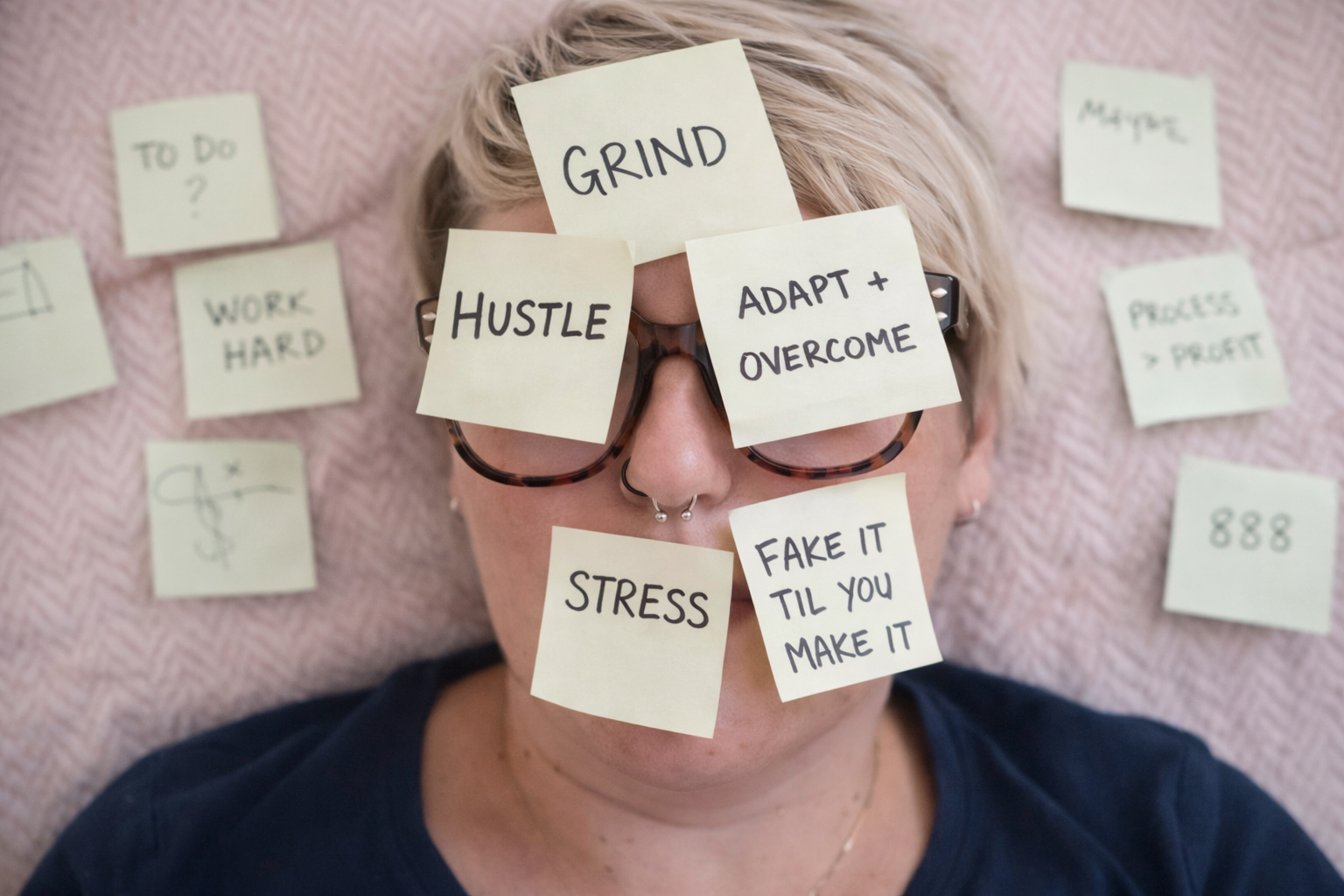
“We call this resilience. I call it overcompensating.”
The bouncing wasn’t random
I didn't follow one neat path. I moved. Military to education. Education to leadership.
Different roles. Different environments. New systems, new expectations, new ways of working, I had to figure out quickly.
Every time, I was thinking:
"Right. Maybe this one will make sense."
And every time, eventually... something didn't.
Not in a dramatic way. In a slow, wearing-down kind of way.
Things that should have been simple weren't. Processes existed, but didn't actually help. Work took more effort than it should.
And everywhere I went, I saw the same thing…
Smart people. Reliable people. Working hard. Still finding work harder than it should have been.
The response? Was always the same… They just need more support. They need to manage their time better. They need to be more resilient. 🙄
Why are we always trying to fix the people... when the work itself doesn't make sense?
When I say I work in inclusive work design, I’m not talking about buildings or furniture.
I’m talking about how work actually works. Day to day. In the weeds. Where people either get on with their job or spend half their energy trying to figure out how.
It’s about making that stuff work with how people think, not against it. Not as an add-on. As standard.
In most organisations, nobody designed it. It just accumulated. And the people it fits least are the ones spending the most energy working around it.
Inclusive work design is simply this:
Does the way work is set up make sense to the people doing it?
Because right now, in a lot of UK organisations, local government, tech, education, and healthcare, it doesn't.
People are expected to:
Remember everything
Juggle constantly
Interpret unclear instructions
Sit in meetings that don't help
Work around systems that slow them down
And when they can't? We question them.
Sound familiar? Start here.
The Capacity + Clarity Self-Check takes less than 10 minutes.
Five questions that tell you whether the problem is structural or personal… before you do anything else.
The moment it clicked (or built up)
There wasn’t one big lightbulb moment. It was a pattern… coaching people, listening properly, hearing the same sentence again and again:
“I know how to do my job… I just can’t seem to do it anymore.”
And when you look at what’s actually happening, it’s not capability. It’s unclear expectations, constant interruptions, poorly designed systems, cognitive load that never switches off.
Like a manager sending a one-line brief that means something different to everyone who reads it. Or a process that requires four approvals to do something that used to take one. Or a meeting where nobody’s sure what decision was made or who owns it.
That’s not a people problem. That’s a design problem.
This is where Neuroinclusion actually matters…
The people most affected by this are often the ones already doing more to navigate it. Neurodifferent people. People managing health conditions. People carrying more behind the scenes than anyone sees.
When work doesn't make sense, it affects everyone. Some people just hit the wall faster.
Why this matters to me
I care about this because I've lived it.
I know what it feels like to be capable and still feel like you're constantly behind. To be the one people rely on and still feel like you're barely holding it together.
To sit there thinking:
"Why is this so hard when I know I can do this?"
That’s not a nice-to-have problem. That’s exhausting. And it’s unnecessary.
What inclusive work design actually changes
This is where it stops being a concept and starts being useful.
When work is designed properly, people don’t have to second-guess everything. Instructions land the first time. Decisions sit where they should. Systems reduce effort instead of adding to it.
The result isn’t just that work feels better. It’s that people can actually do their job. Consistently. Without burning through all their energy just getting started.
That’s what improves performance. Not pushing people harder.
The result isn’t just that work feels better.
It’s that people can actually do their job. Consistently. Without burning through all their energy just getting started.
That’s what improves performance. Not pushing people harder.
This isn’t about 'special cases'
This isn’t about creating something extra for a small group of people.
This is about making work actually work.
Clearer communication helps everyone. Simpler processes help everyone. Better ways of working help everyone.
Inclusive work design improves the baseline. It doesn’t create exceptions.
The bit I’ll leave you with
I don’t do this work because it’s trendy.
I do it because I’ve been the one sat there thinking:
"I know I'm good at this... so why does it feel like I'm failing?"
Turns out I wasn’t failing.
The work just didn’t make sense.
And once you see that, you can’t unsee it.
More importantly, That’s where the work starts.

White ceramic mug with the Inclusive Minds UK (IMUK) logo sits on a tidy wooden desk, filled with coffee. Surrounding the mug are a notebook with a pen resting on it, a small potted plant, and neatly stacked stationery, with a softly blurred, calm workspace in the background.
Not sure where to start?
The Capacity + Clarity Self-Check is a good first step.
Five focused questions. Less than 10 minutes. Helps you see whether the pressure is structural or personal before you do anything else.
Already clear it's a work design problem?
We will look at what’s actually getting in the way.
#MakeWorkMakeSense #Neuroinclusion #InclusiveWorkDesign #WorkDesignUK #NeurodivergentEmployees #CognitiveLoadAtWork #InclusiveWorkplaceUK
